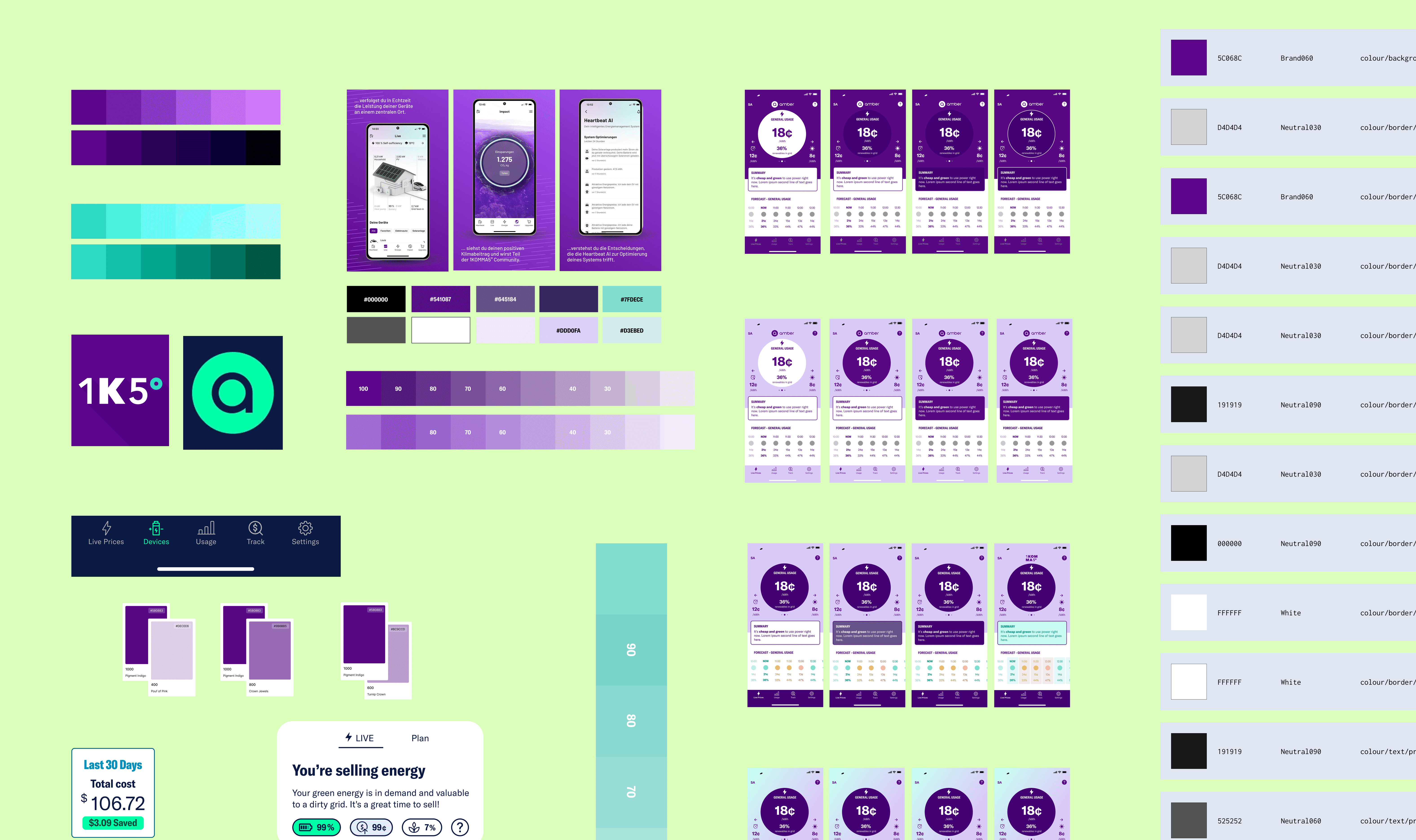
The problem: Reskin an entire app that wasn’t built to be reskinned.
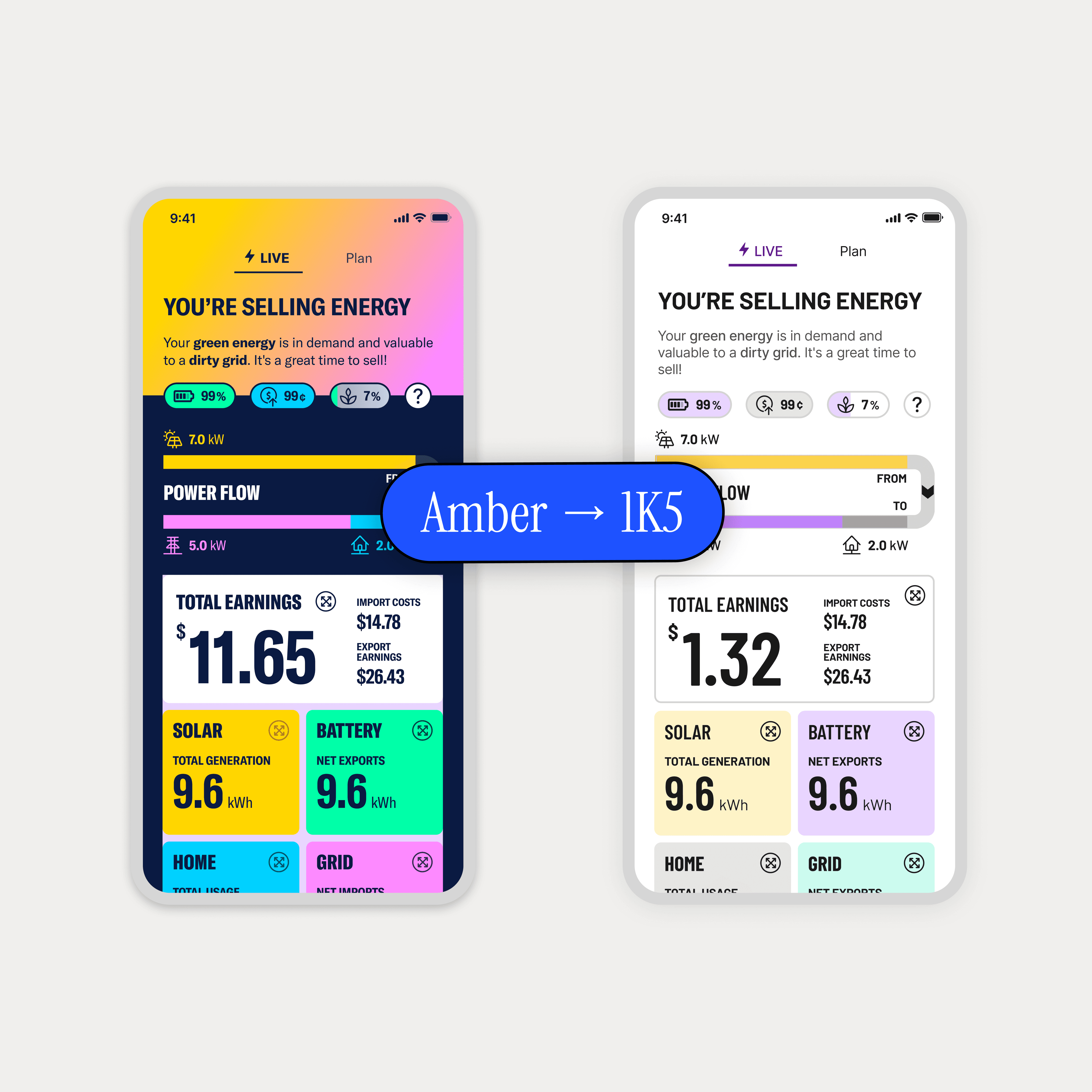
1Komma5° was launching in Australia and needed a fully white-labelled version of the Amber app, branded as Heartbeat AI. Same infrastructure underneath, but a completely different experience on the surface.
The challenge was that Amber hadn’t been built with this in mind. There was no real design system. Fonts, colours, and components were used inconsistently across hundreds of screens, which meant there was no single way to “flip” the brand. Everything had to be worked through manually, screen by screen. Every decision needed to be thought through, applied consistently, and documented clearly enough that developers could run with it without needing design in the loop every time.
The approach: Define and document the logic, not every screen
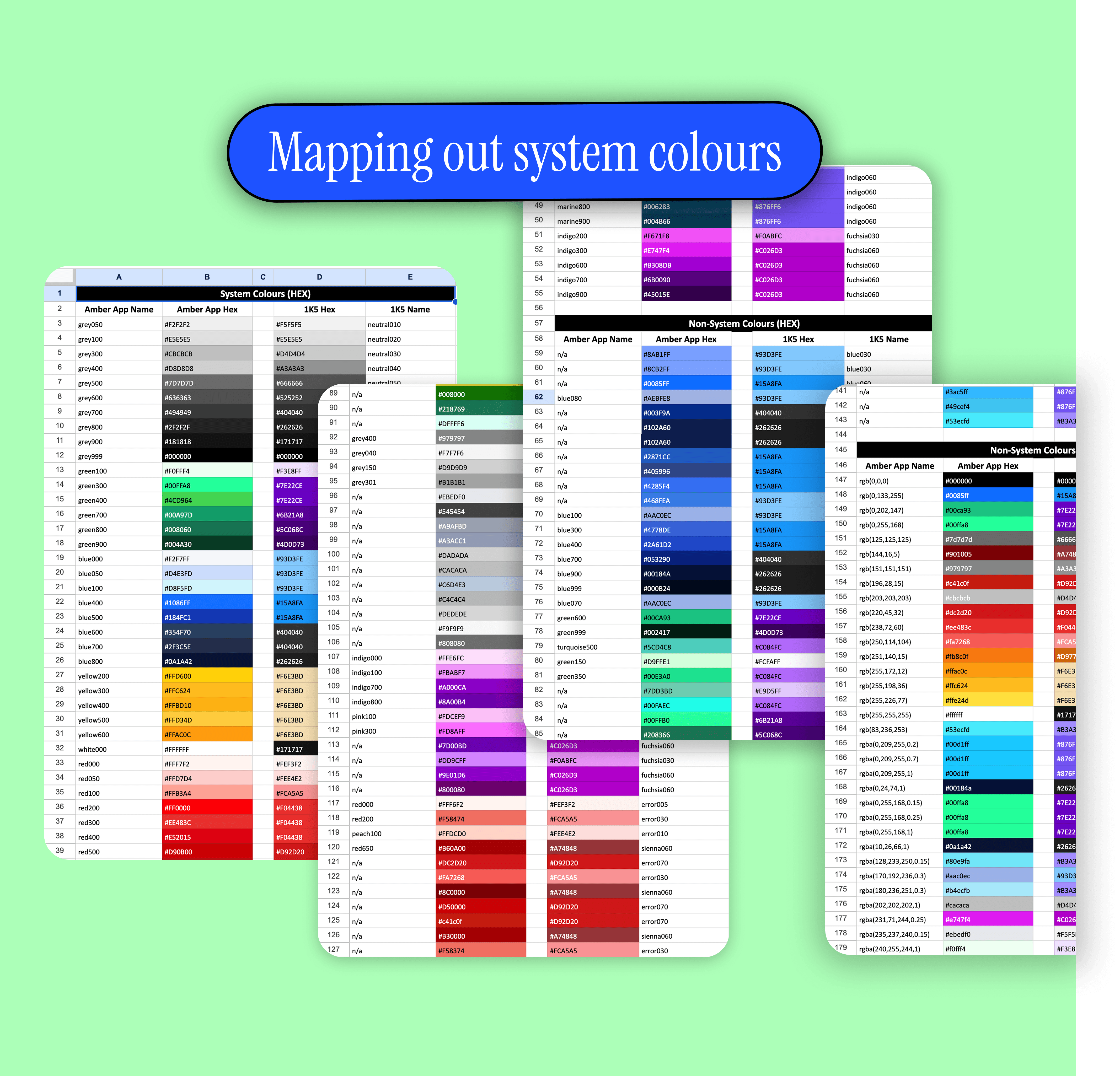
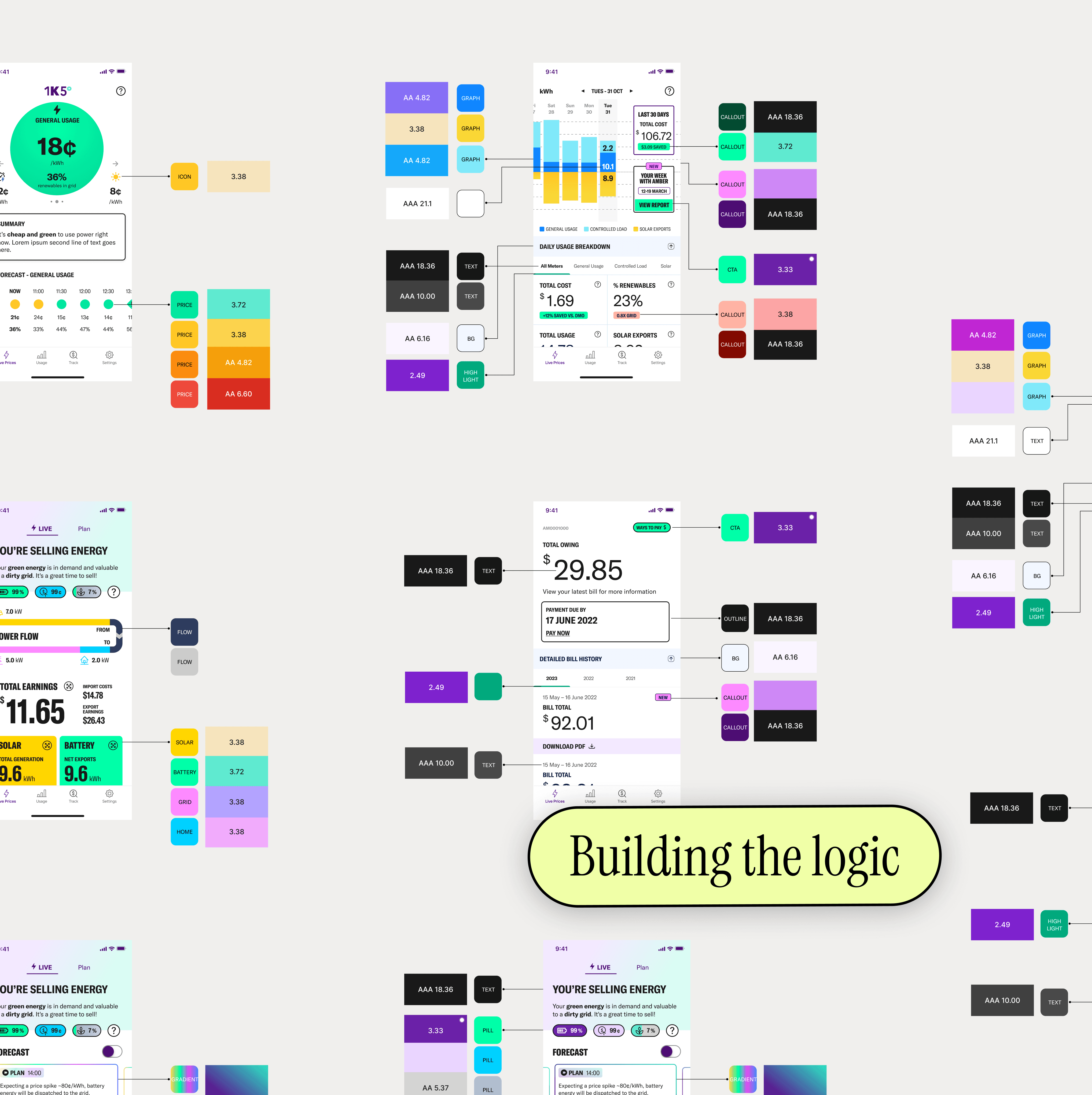
Instead of redesigning every screen, I focused on creating a clear system for how the reskin should work. I set up a living decision log in Figma that mapped Amber → 1K5 across fonts, colours, backgrounds, and all the edge cases in between. It became the source of truth for both design and dev.
From there, it was about momentum. I stayed close to developers through constant huddles, working through questions in real time and refining the logic as we went. Rather than handing off static designs, I was shaping rules and patterns that could scale across the app. This meant we could move quickly without losing consistency. Developers could build independently, and we weren’t blocked on design for every small decision.
The outcome: Delivered on time, even when everything around it shifted.
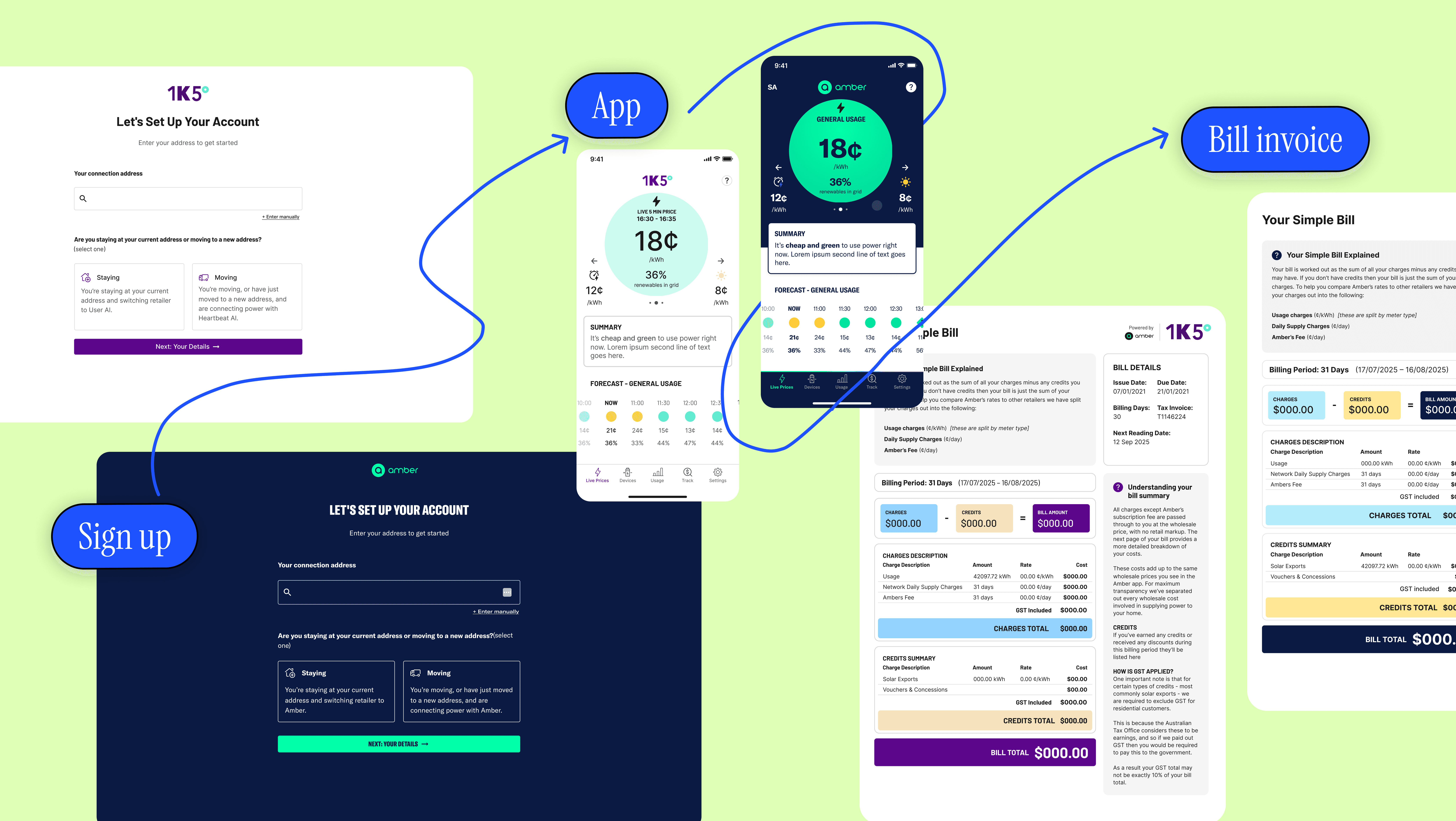
Heartbeat AI was ready within the original 3 month design timeline, despite delays on the 1K5 side due to technical challenges with their battery systems. While the final launch moved, design had already delivered the full experience, not just the app, but every supporting flow including email, get a quote, and sign-up, all fully reskinned and consistent.
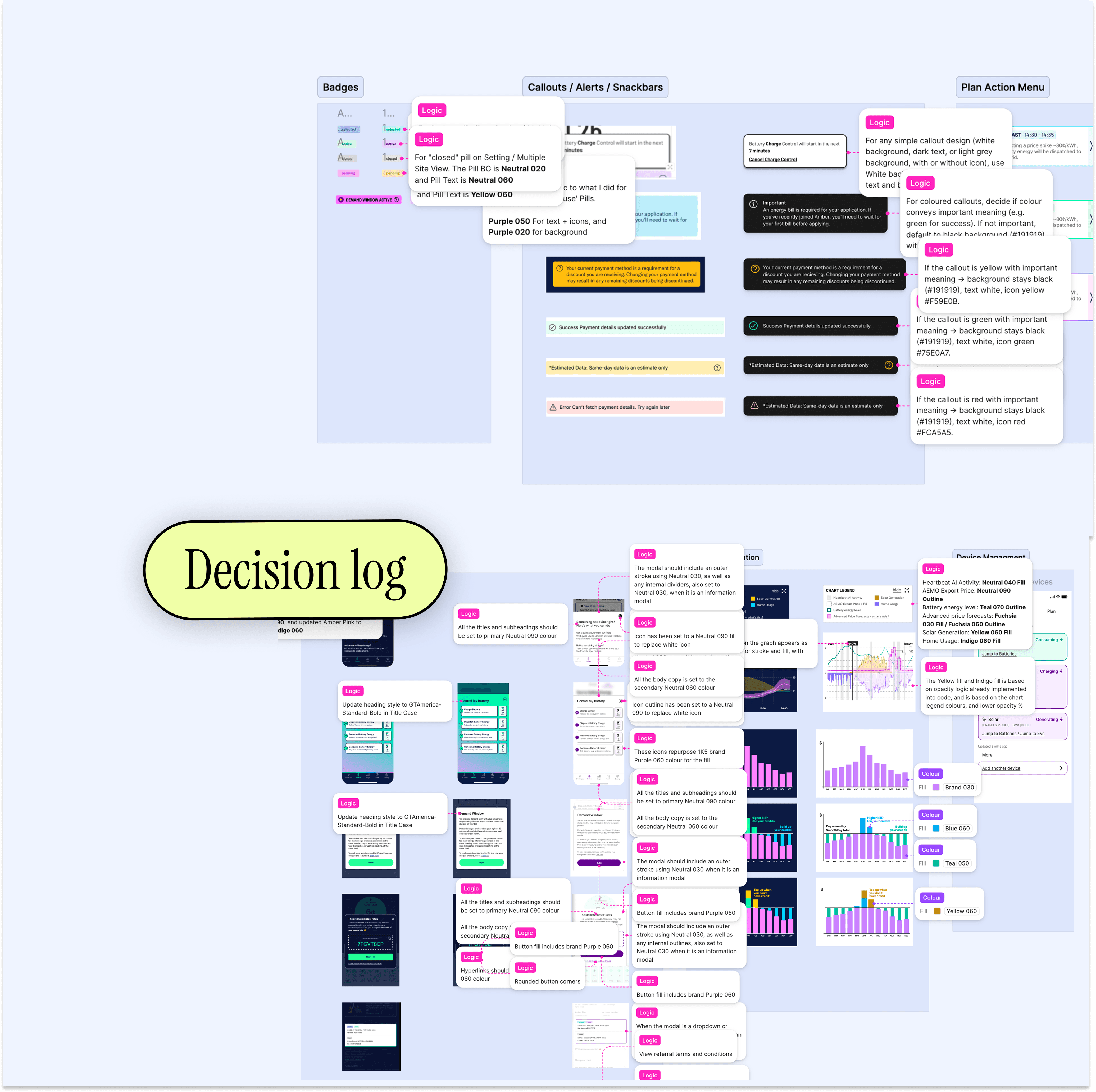
This wasn’t just a visual pass. 1K5 came in with a meticulous design system, and part of the work was deciding what to adopt, what to adapt, and what to push back on. I aligned the approach with Amber’s structure where it made sense, and worked closely with their design lead to land on something cohesive. The decision log ended up being more than just a delivery tool, reused across A4U, EON Next, and Ecotricity, turning a one-off reskin into a repeatable approach for future white-label builds.
learnings... and what next?
Without a clearly defined scope upfront, the team pivoted constantly. Misalignment between what 1K5 expected and what Amber had agreed to deliver led to rework. Setting expectations earlier would have saved time and allowed the team to execute with more confidence.
The decision log ended up being the most valuable output. Designing every screen would have been slow and expensive. Capturing the logic allowed developers to move independently and made the work scalable across future projects.
The first pass was optimised for speed, not repeatability. It worked in the moment, but ended up becoming the foundation for multiple white-label projects. Investing earlier in a proper token system would have made it much easier to scale, and it’s something we’re now actively moving towards as a design system.
Quick huddles for decisions, Loom for async updates, and Linear for tracking meant questions were answered quickly and didn’t sit around. Developers could keep building without waiting on design input, and we avoided long feedback loops and unnecessary meetings.